


 中文简体
中文简体 English
 Français
 عربى
عربى +86-15988502726(wechat)






You can contact to me using this form.
Blood storage is not simply a matter of keeping products cold. For blood banks, hospitals, laboratories, and healthcare procurement teams, the refrigeration system needs to support stable temperature control, continuous monitoring, organized storage, and reliable daily operation. WHO guidance emphasizes that blood and blood products should not be stored in unmonitored refrigerators, while recent global blood-safety initiatives continue to focus on quality systems and resilient blood services.

Temperature Control Should Come First
The specification buyers should examine is temperature performance. Whole blood and red blood cells require controlled refrigerated storage, so a suitable unit needs to maintain the temperature range specified by the applicable local requirements and blood-storage procedures.
A refrigerator designed specifically for blood storage is different from a domestic refrigerator. Purpose-built systems can be designed around controlled air circulation, temperature monitoring, alarms, insulation, and organized internal storage. These features help reduce the risk of unnoticed temperature changes during routine operation.
Continuous Monitoring Matters During Daily Use
A displayed temperature is useful, but procurement teams should also consider how temperature changes are recorded and reported. Monitoring becomes particularly important when staff are not standing beside the refrigerator throughout the day.
Modern cold-chain management increasingly uses electronic monitoring, data logging, and alarm functions to provide a clearer record of equipment conditions. WHO guidance on temperature-monitoring devices identifies data loggers, alarms, and equipment monitoring systems as different tools for tracking refrigeration performance.
What Happens During a Power Interruption?
Power reliability should be part of the purchasing discussion from the beginning. A refrigerator may perform well under normal conditions but face a different challenge when electricity is interrupted.
Before ordering, buyers should evaluate:
- Available backup power at the facility
- Expected local power stability
- Alarm functions during abnormal conditions
- Temperature recovery after power is restored
- Manufacturer guidance for emergency operation
The goal is not simply to purchase a refrigerator with a backup feature, but to understand how the entire blood-storage system will respond to an interruption.
Internal Layout Can Affect Workflow
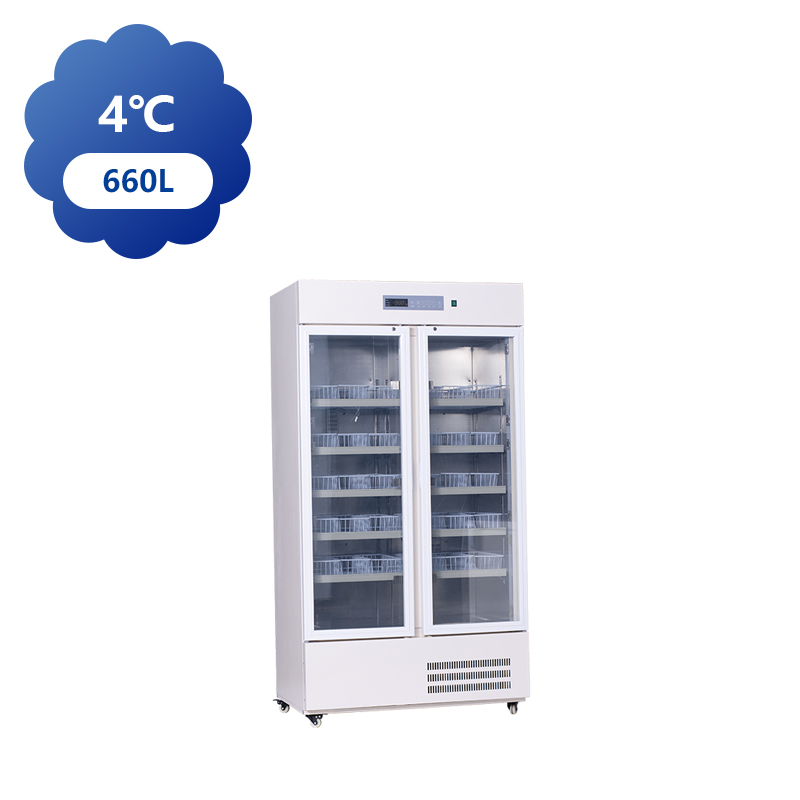
Storage capacity should also be considered from an operational perspective. Staff need to locate blood products efficiently without keeping the door open longer than necessary. WHO guidance notes that blood-storage refrigerators may use shelves or drawers to organize stored units and recommends limiting unnecessary door opening.
For procurement teams, this makes internal configuration an important part of the specification. Shelf arrangement, visibility, access, cleaning, and usable storage space should be assessed according to the facility's actual workflow rather than cabinet volume alone.
Alarms Need to Support Real Decisions
An alarm is only useful when staff can respond appropriately. Buyers should therefore ask what conditions trigger an alarm, how clearly abnormal temperatures are indicated, and whether the monitoring system can support routine record keeping.
For healthcare facilities, alarm visibility and temperature records can help staff identify problems earlier and follow their established procedures when storage conditions move outside the required range.
Maintenance Should Be Considered Before Installation
Refrigeration equipment becomes part of a long-term healthcare workflow after installation. Procurement teams should therefore examine maintenance access, replacement parts, technical support, cleaning requirements, and service arrangements before making a purchasing decision.
As a manufacturer, we recommend discussing the actual installation environment with the supplier in advance. Ambient conditions, available power, storage capacity, monitoring requirements, and service resources can all influence the appropriate equipment configuration.
Choose the Refrigerator as Part of the Blood Cold Chain
A suitable Blood Bank Refrigerator should support more than refrigerated storage. It needs to fit the facility's temperature-control procedures, monitoring system, daily workflow, emergency planning, and maintenance capabilities. With WHO continuing to emphasize quality-assured and resilient blood systems, equipment selection should be treated as one part of a wider cold-chain strategy rather than an isolated purchase.
